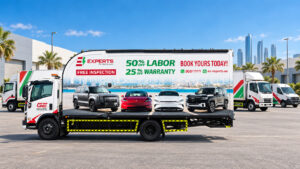
Vehicle branding in Abu Dhabi can turn company cars, vans and delivery vehicles into a consistent extension of your business identity. The strongest fleet graphics make the company name, service and contact information easy to understand without crowding every panel.
A successful project needs more than a design. The vehicle shape, paint condition, film specification and installation plan all matter. Use this guide to prepare a clear brief and compare proposals for your fleet.
Choose the right coverage for your fleet
Start by deciding how much of each vehicle needs branding. Cut lettering and decals suit a simple identity treatment. Partial wraps combine printed graphics with the original paint colour. Full wraps offer a larger design area, but require a more detailed installation scope.
For a mixed fleet, create a design system that works across different vehicles rather than stretching one layout to fit every model. Keep the logo, colours and main message consistent, then adjust placement around doors, handles and panel breaks.
Keep fleet graphics readable
Prioritise the business name, one clear service message and a useful contact route. Review side and rear layouts separately. A design that looks attractive on a screen may be difficult to understand when viewed briefly on a vehicle.
Check spelling, telephone numbers and website addresses before approving artwork. Request a separate proof for each vehicle type, with the final dimensions and placement shown. Keep important information away from gaps or moving panels that could interrupt the message.
Vehicle graphics materials: what to ask your supplier
Ask for the exact film and any protective overlaminate specified in the quotation. A description such as “premium vinyl” alone does not explain whether the material is appropriate for the vehicle shape and intended use.
Cast and calendered films
Cast films generally offer greater conformability for complex curves and vehicle wraps. Calendered films are commonly used for flatter surfaces and shorter or intermediate applications. The suitability of a particular product should be confirmed against its manufacturer guidance, rather than decided from the film category alone. See Avery Dennison’s film guidance for an overview.
Protective overlaminates
An appropriate overlaminate can help protect printed graphics and support colour longevity. Ask whether the quoted film and laminate are a compatible system, and request care instructions and the applicable warranty terms. Avery Dennison explains overlaminate options for exterior graphics.
Avoid assuming that every wrap has the same service life. Vehicle use, surface orientation, exposure, maintenance and the selected product affect the specification and warranty. Ask your installer to explain these factors for your fleet.
Plan the installation before taking vehicles off the road
Begin with an inspection and measurements. Record existing paint damage, repairs and surface conditions, and ask the installer whether they affect suitability. Surface preparation should follow the selected film manufacturer’s instructions. Avery Dennison’s wrap preparation guidance highlights the importance of paint condition and preparation.
Agree which parts are included in the wrap and whether any fittings need to be removed or refitted. Installation should follow the product’s application guidance, including any required finishing steps. At handover, inspect panel alignment, edges, lettering and contact details together.
For several vehicles, schedule work in batches so your business can keep operating. Agree a pilot vehicle first when practical, then use the approved result as the reference for the remaining fleet.
Confirm permissions and responsibilities
Before production, establish who will check the approvals applicable to your vehicle and advertising design. Ask the responsible authority, vehicle owner and fleet manager to confirm requirements for your specific project. Agree who handles submissions and costs before booking installation.
This is particularly useful for leased vehicles: clarify consent, removal expectations and the condition required at return. Do not treat a supplier’s mockup as evidence that permission has been granted.
What should a vehicle branding quotation include?
Request an itemised scope listing the vehicle models and quantities, coverage areas, artwork, film specification, laminate, preparation, installation, exclusions and handover checks. Clarify revision rounds, vehicle downtime, warranty terms, maintenance guidance and eventual removal.
Send photographs of each vehicle type, your logo files, brand colours, proposed wording, fleet size and target completion date. If the existing graphics need removal, include that in the brief so proposals cover the same work.
Frequently asked questions
How much does vehicle branding in Abu Dhabi cost?
The price depends on vehicle size, coverage, design complexity, materials, preparation and installation. Request a project-specific quote using the same brief for every supplier you compare.
Can different vehicles use the same branding?
Yes. Keep the visual identity consistent while adapting the artwork to each model’s dimensions and panel layout. Approve proofs for each vehicle type before production.
How should fleet graphics be maintained?
Follow the written cleaning and care instructions for the installed film system. Ask how to report lifting edges or damaged areas, and keep a record of the material used so replacement graphics can be specified correctly.
Discuss your fleet graphics with 4K Advertising
Planning vehicle branding in Abu Dhabi? Share your vehicle photographs, fleet size and branding goals with 4K Advertising & Designing. Explore our vehicle graphics and printing services, or contact our team to discuss materials, design and installation requirements.